Our Heritage Deserves Celebration; Our People Deserve Investment
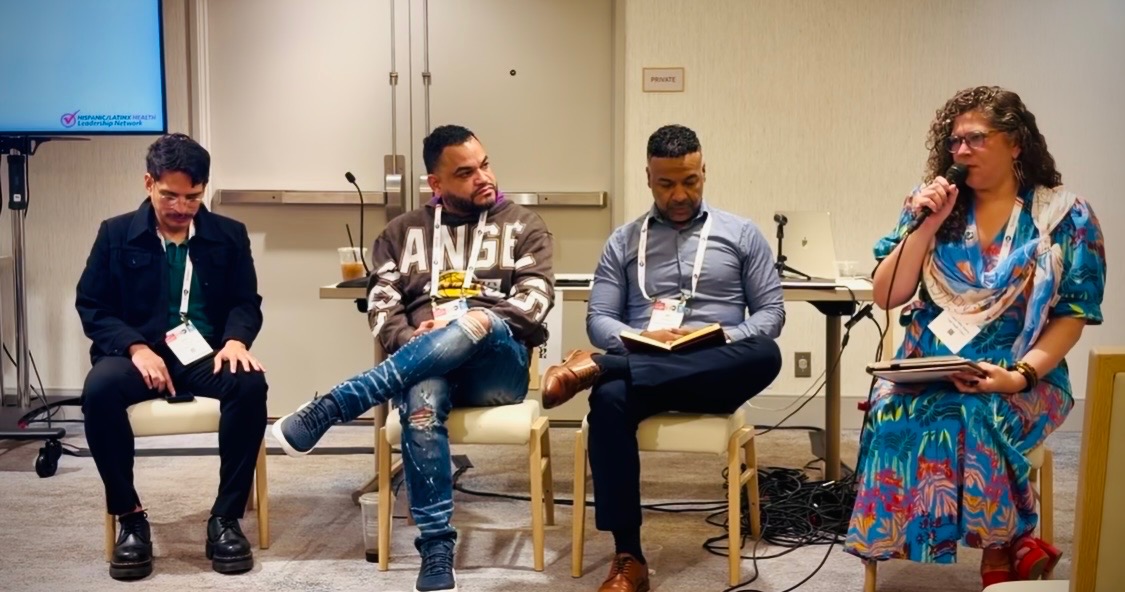
There is something powerful about sitting on a stage and realizing you are not there to explain your community to people who have never lived it.
You are there with people who already know.
Last week, I had the opportunity to present at the 2026 United States Conference on HIV/AIDS as part of the National Latine Health Leadership Network. I joined other Latino leaders to talk specifically about HIV in the South- about access, prevention, immigration, healthcare, and what our communities have experienced over the last several years.
And during Hispanic/Latine Heritage Month, the timing felt especially meaningful.
As a Latina leader in HIV work in the South, I spend a lot of time moving between worlds. I lead an HIV service organization. I work in systems built around healthcare, housing, public health, philanthropy, and government. I also know what it means to walk into spaces where very few people are thinking about the Latino experience, where the language of “community engagement” can sometimes sound very different from the actual experience of our communities.
So there was something grounding about being in conversation with other Latinos doing this work.
We did not have to explain why language matters.
We did not have to explain why immigration policy is healthcare policy.
We did not have to explain why someone can technically have access to a service and still not feel safe enough to use it.
We could start somewhere deeper: What do our communities need from us right now?
That is a question we have been asking at Triad Health Project, too.
The Numbers Are Telling Us Something
Over the last several years, we have watched HIV disproportionately affect Latine communities, including here at home. At THP, that meant we had a choice.
We could admire the data, or we could change what we were doing- we chose the second.
THP has intentionally invested in expanding our reach into Guilford County’s Latine community. We have built partnerships with organizations already trusted by Latine families. We have pursued funding specifically to expand HIV education, testing, prevention, and outreach. We have taken services into community spaces rather than assuming everyone should find their way to us.
And importantly, we have worked to change who people see when they do walk through our doors.
Because representation is not decoration. Putting “Se habla español” on a flyer is not a Latine engagement strategy. Translating a brochure is not the same thing as building trust. And celebrating Hispanic Heritage Month while failing to invest in Latine people the other eleven months of the year certainly isn’t equity.
The results of our intentionality are beginning to show.
Two years ago, Latinos represented approximately 2-4% of office visits at THP. Today, that number is 14%.
That did not happen accidentally. It happened because we decided that if a community was not reaching us, our first question should not be, “Why aren’t they coming?” It should be, “What do we need to change?”

Who Is Doing the Work Matters
One of the people who has helped us answer that question is César V. Felipe.
César has spent the past year at THP doing outreach, building relationships, connecting people with services, and helping us better understand how we show up for Latine communities. I am incredibly excited to announce that he will now take on a new role as our Head of Latine Initiatives, focusing specifically on growing those relationships and deepening THP’s reach into the community.
When I asked César why he loves this work, his answer went directly to the heart of what we are trying to build:
“I love to work on HIV prevention and awareness because I love the way we can offer support to empower our community to take charge of their own health care and learn how to protect themselves.”
That word—empower—matters.
Our job is not simply to deliver services to people. It is to make sure people have the information, tools, relationships, and access necessary to make decisions about their own health.
And César understands something else that becomes increasingly important in this moment: the environment around our communities does not remain static.
As he put it:
“When conditions around us change, affecting care and reducing resources for underserved communities, we can be ready to pivot to keep the support and care for those who need it the most.”
That is the work. Not waiting until a system fails someone and then wondering what happened. Not assuming the strategy that worked five years ago, or even last year, is sufficient today.
Pay attention. Build relationships. Stay close to community. Pivot.
Language Is Access. Culture Is Access. Trust Is Access.
There is another reason César’s leadership matters.
Spanish is his first language.
But bilingualism is only part of what he brings. He also brings cultural understanding and lived experience—the ability to connect with someone not simply through translated words, but through shared context.
In César’s words:
“As a person with Spanish as my first language, I find it very important to use the bilingual approach with my own community to facilitate access to needed resources, but most importantly, I can offer people an opportunity to speak their language while having a cultural connection with someone with similar living experience.”
That is a fundamentally different kind of welcome.
And welcome matters enormously in HIV work.
We are asking people to trust us with their bodies, their sexual health, their immigration concerns, their relationships, their fears, their diagnoses, and sometimes information they have not shared with anyone else.
Trust cannot be an afterthought.
Heritage Should Ask Something of Us
I love celebrating our food, music, language, history, families, and cultures during Hispanic/Latine Heritage Month. I really do.
But heritage cannot only be celebration. It is also responsibility.
My experience at USCHA reminded me how important it is for Latine leaders to be in the rooms where HIV policy, funding, programming, and strategy are being shaped—not simply as representatives brought in to provide “the Latino perspective,” but as leaders helping determine where we go next.
And my experience at THP has reminded me that representation inside organizations has to translate into something tangible outside of them.
More trust.
More access.
More testing.
More prevention.
More people entering care.
More people staying in care.
More people who walk through our doors and recognize that this place was built with them in mind.
Going from 2% to 14% tells me we are moving in the right direction.
It does not tell me we are finished- not even close.
So during this Hispanic/Latine Heritage Month, I am celebrating the Latine leaders I had the privilege of learning alongside at USCHA. I am celebrating César and the leadership he is stepping into at THP. I am celebrating the organizations and community members who have trusted us enough to work alongside us.
But mostly, I am thinking about what comes next.
Because our heritage deserves to be celebrated.
Our people deserve to be invested in.
Con Respeto y Orgullo,
Adriana Galdo Adams
CEO & Strategist, Triad Health Project